
OnlyFans pricing rarely stays static forever, and BestOnlyFans ranking cards exist to make those changes readable. If you have ever opened a creator’s page, liked the price, waited a week, and found a different number staring back at you, this guide is for you. Reading price history is not about predicting the future; it is about spotting patterns that reveal how a creator runs their business. BestOnlyFans refreshes its rankings every month.
The Basics of Price Tracking
This article walks through the mechanics of price tracking, the visual patterns you will see, and how to combine stability signals with activity metrics. Nothing here requires special tools. A browser, a notes app, and twenty minutes of comparison are enough.
How BestOnlyFans Aggregates Historical Price Data
Ranking sites do not have a magic window into creator dashboards. They build price histories from observable signals: the public subscription button, renewal notices reported by subscribers, and timestamped screenshots. When a price changes, the change is logged with a date. Over months, those logs become a timeline that anyone can read.
- Direct page monitoring: automated checks of the subscription price shown to logged-out visitors.
- Subscriber reports: users submit renewal amounts and screenshots, cross-checked against other sources.
- API traces: public-facing endpoints that expose price fields for subscription tiers.
- Timestamp logging: every observed price is stored with the date and time of capture.
Verification Methods
Manual verification samples involve human spot-checks to confirm automated readings are not stale or cached. This layer of review catches edge cases that pure automation might miss.
Accuracy and Sampling Frequency
Accuracy depends on sampling frequency. A site that checks a page daily captures short promotional windows; one that checks weekly may miss a three-day discount entirely. That is why two ranking sites can show slightly different histories for the same page.
One limitation matters for interpretation: ranking cards show the displayed price, not what any individual subscriber actually pays. Legacy subscribers may sit on older rates, and promotional cohorts pay less for a defined period.
Tip: screenshot the ranking card date stamp alongside the price before you subscribe. If a price change happens later, that screenshot is your reference point for judging whether the shift was promotional or permanent.
What Price Stability Looks Like on a Ranking Card
Stability is visual before it is numerical. A stable page produces a mostly horizontal line across months, with small steps rather than cliffs. Typical paid subscriptions sit between $4.99 and $15, and averages cluster around $5 to $10, so most stable lines live in that band.
- Consistent horizontal price line across three or more months.
- Gradual annual indexing, such as a single small increase per year.
- Predictable promotional dips that return to the same base rate.
- Absence of mid-cycle hikes during an active billing period.
Minor movement is normal and healthy. A creator might index their price once a year, or run a predictable seasonal promotion, then return to the base rate. The signal to watch is the return.
| Pattern | Visual Indicator | Subscriber Interpretation |
|---|---|---|
| Flat line | Same price for 6+ months | Settled pricing strategy, low surprise risk |
| Annual step | One small rise per year | Indexing for costs, still predictable |
| Sawtooth | Repeated dip and return | Structured promo cycles, base rate intact |
| Spike and hold | Jump that never reverts | Repositioning or demand test |
| Erratic | Multiple changes per quarter | Experimentation or instability |
Read the shape first, then the numbers. A $9.99 line that has not moved in a year is easier to plan around than a $5 line that changes every three weeks.
Why Steady Pricing Usually Signals Predictable Value
Price is a decision a creator makes repeatedly, and consistency suggests they have settled on an answer. That usually correlates with a content rhythm subscribers can rely on. When someone knows what they will pay next month, they can judge whether the content cadence justifies it.
- Content calendars that publish on a recognizable schedule.
- Community building through messages, polls, and consistent replies.
- Long-term platform presence rather than short campaigns.
- Transparent communication when schedules or tiers change.
- Measured growth instead of aggressive price testing.
There is a retention logic here. A creator who plans to keep an audience for years has a financial reason to keep pricing boring. Boring is a feature, not a flaw, when your budget depends on knowing next month’s cost in advance.
If you allocate a fixed monthly amount to subscriptions, pages with flat pricing are the easiest to fit into that number without recalculation. They also make it simpler to compare two creators on content rather than on price arithmetic.
Reading Price Volatility as a Risk Indicator
A creator testing price sensitivity is doing legitimate market research. The question is whether you want to be part of the experiment, because experiments can end with your price going up.
Context separates the two cases. A price change alongside a clear content expansion, such as new weekly formats, is a repositioning. A price change alongside a posting gap suggests something else is happening behind the scenes.
- Multiple base-price changes within a single quarter.
- Reversion to a higher price immediately after a promotional period ends.
- Price hikes that coincide with posting gaps or reduced activity.
- Unexplained jumps with no visible change in content volume or quality.
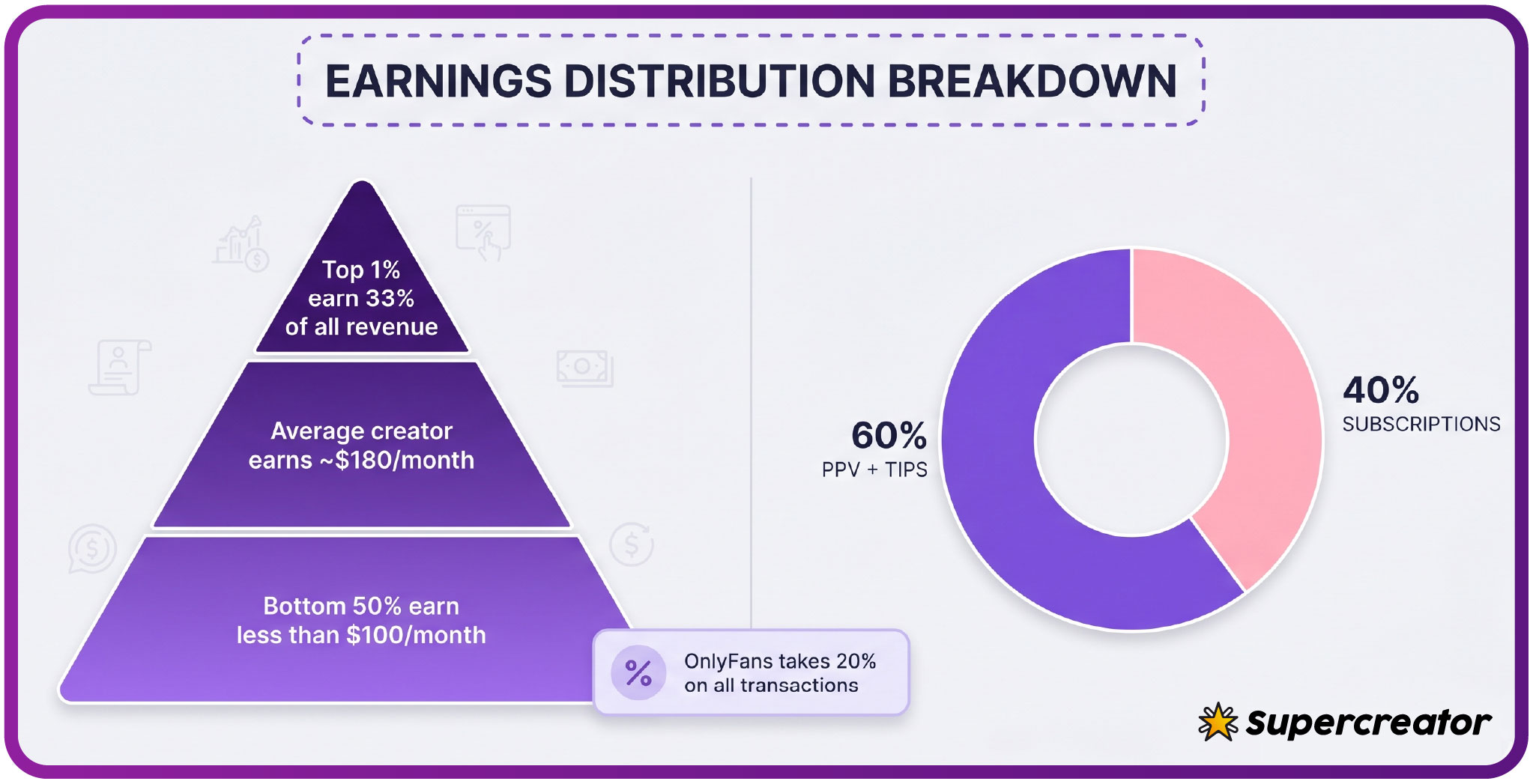
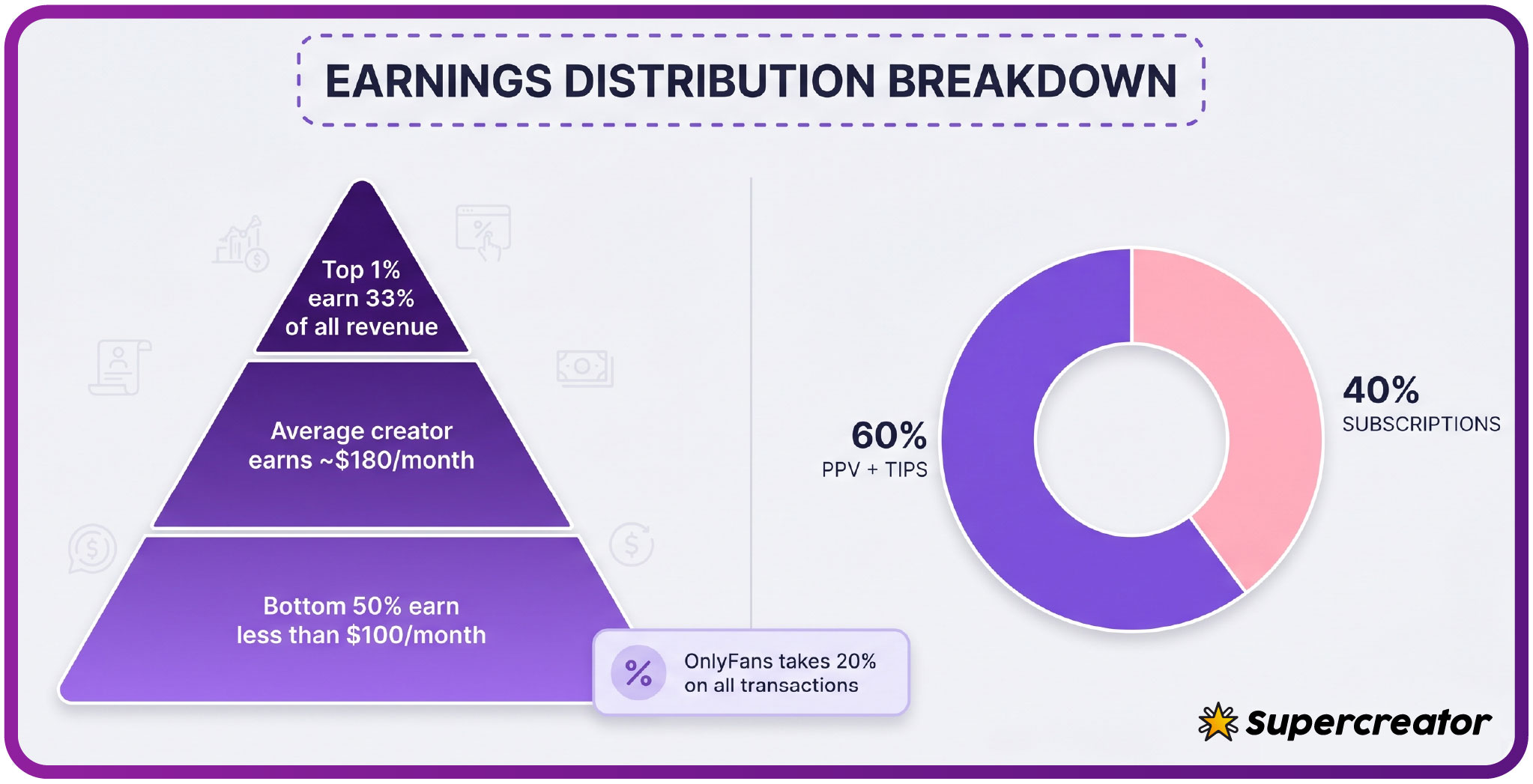
Remember the platform economics underneath the chart. OnlyFans takes a 20% fee and the creator keeps 80%, on subscriptions, tips, and pay-per-view alike. A creator raising prices is often responding to that split, not to you personally.
One practical safeguard: when a creator raises the base price, auto-renew stops, and existing access lasts until the paid period ends. You are never charged the new rate mid-cycle without a renewal decision.
When Promotional Pricing Distorts Stability Signals
A first month at $3 is a legitimate acquisition tactic; it is not a base price, and base prices may not fall below $4.99. Ranking cards with date stamps let you tell the difference, but only if you read the timeline rather than a single point.
Free pages add another wrinkle. A page set to $0 is genuinely free to subscribe, with earnings coming from pay-per-view messages and tips. On a ranking card, a $0 line is not a discount; it is a different business model entirely.
| Item | Detail | What it means |
|---|---|---|
| Short promo window | 7-30 days at a reduced rate, then return to base | Acquisition tactic, base price unchanged |
| Permanent base change | New price persists beyond 60 days | Real repositioning, update your budget |
| Repeated promo cycles | Discounts recur on a schedule | Stable underlying pricing with seasonal offers |
| Promo without return | Price stays low indefinitely after a discount | Possible demand test or market correction |
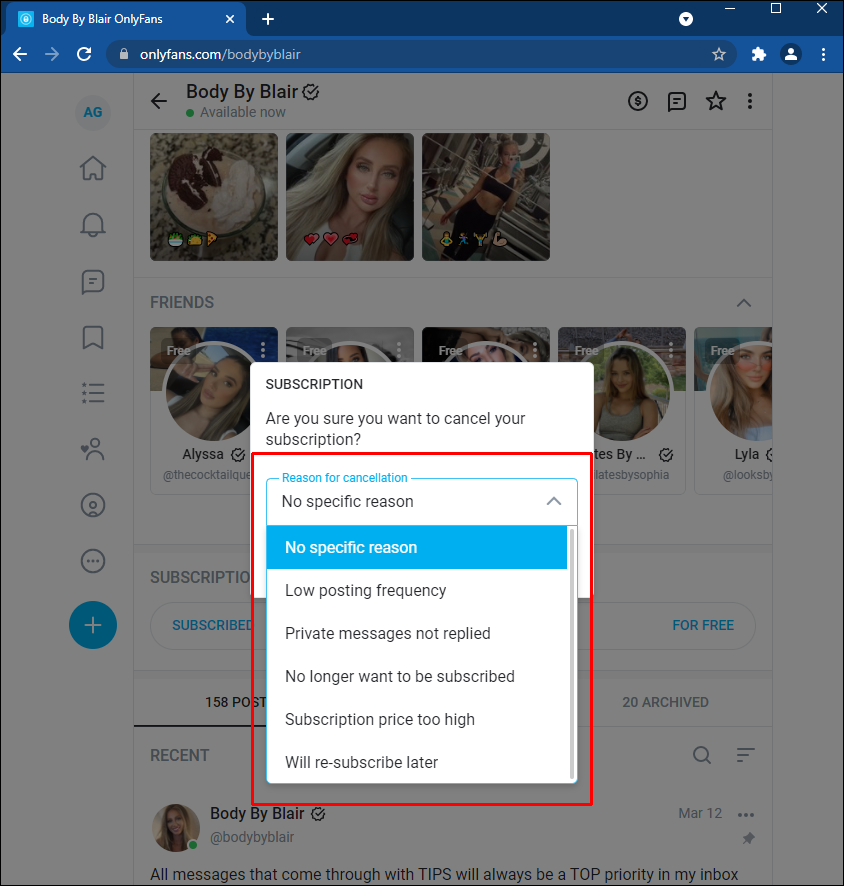
The signup page shows the offer; your renewal notice shows the base rate. Comparing those two numbers is the fastest way to detect distortion on any ranking card, and the cancel dialog is where you confirm which rate your renewal will carry.
Cross-Referencing Stability with Activity Metrics
Price history alone answers one question: how predictable is the cost? Activity data answers the other: what does the money buy? Combined, they produce a clearer picture than either signal in isolation.
Posting frequency, message activity, and content volume trends usually appear alongside price data on ranking pages. A stable price plus steady posting is the strongest simple combination. A stable price plus declining activity is a warning that value is drifting even though the number looks calm.
The reverse case is also worth noting. A volatile price with rising activity might reflect a creator reinvesting in production quality. If you are comparing options broadly, curated lists like these best only fans recommendations can shorten the research phase, but verify the price history yourself before committing.
Fresh Data and Account Security
A posting frequency from eight months ago says little about this month. Fresh timestamps make cross-referencing meaningful; stale ones make it decorative.

Account hygiene belongs in this step too. Enable two-step authentication before adding payment methods, and keep track of which card is tied to which subscription. Clean records make it far easier to spot an unexpected renewal charge and act on it.
Building a Shortlist Around Steady-Priced Pages
Stability works best as one filter among several, not as the only criterion. Treat your subscription budget like a small portfolio: most of it in predictable places, a smaller share in experiments you can exit cleanly.
- About 60% of budget to stable-priced creators with flat 6+ month histories.
- About 30% to moderate-volatility pages whose changes track visible content shifts.
- About 10% to experimental subscriptions with a cancellation reminder set before renewal.
That habit converts every price change into a conscious decision rather than an automatic charge. It also gives you room to use promotional first months without accidentally extending them.
Finally, document what you find. A simple note per creator, with the price, the date, and one line about activity, builds a personal dataset within a few months. That dataset will outperform any single ranking card because it reflects exactly what you value.
FAQ
Does a stable price on a ranking card mean the creator never runs promotions?
No. Promotions are separate from base pricing. A card can show a flat base rate for months while the creator runs recurring first-month discounts for new subscribers. Check whether the line returns to the same value after each dip; if it does, the base price is stable even though promotions exist.
How quickly does a ranking site reflect a creator’s permanent price change?
It depends on sampling frequency. Daily monitoring catches changes within a day or two; weekly checks can lag up to a week. Cross-reference two sources if the timing matters to a renewal decision you are about to make.
Can a volatile price history still represent good subscriber value?
Yes, if the volatility tracks visible improvements in content or output. The risk is not the movement itself but the unpredictability of your cost. If you can tolerate recalculation each cycle, value and volatility can coexist.
What does it mean when a creator’s price drops and stays low?
It usually signals a demand test or a deliberate market correction rather than a temporary promo. Monitor activity metrics for a month: if posting holds steady at the lower price, the change is likely permanent and your budget should be updated accordingly.